Government welfare programs are designed to support vulnerable families, but unfortunately scammers often try to exploit them. In Pakistan, the Benazir Income Support Programme (BISP) has become a target for fraudsters who misuse the program’s name to deceive people. With thousands of beneficiaries relying on BISP assistance, awareness about these scams is more important than ever.
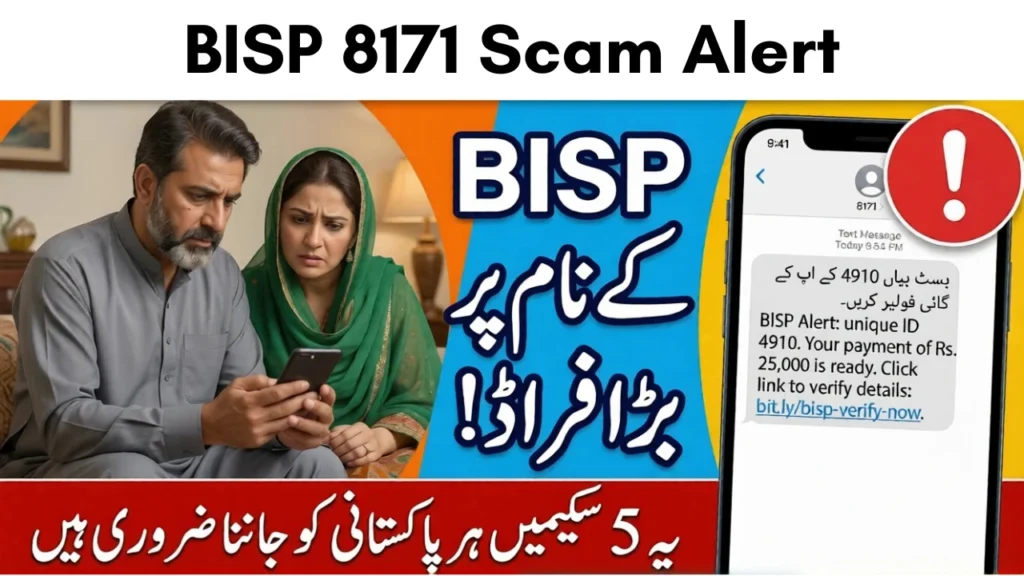
This article explains how BISP scams work, the most common fraud methods in Pakistan, and how families can protect themselves from financial loss.
Understanding the BISP Program
The Benazir Income Support Programme (BISP) is one of Pakistan’s largest social safety initiatives. It provides financial assistance to low-income families across the country. The program also includes the 8171 SMS service, which allows citizens to check eligibility and payment details using their CNIC.

Because millions of people interact with the 8171 system daily, scammers see an opportunity to manipulate individuals who may not fully understand how the program works.
Why Scammers Target BISP Beneficiaries
Fraudsters often target programs like BISP because:
- Many beneficiaries live in rural areas with limited digital awareness
- People urgently need financial support and may trust official-looking messages
- Fake SMS or calls are easy to create and distribute
As a result, BISP 8171 scam messages and fake calls have become increasingly common across Pakistan.
Most Common BISP Scams in Pakistan
Below are some of the most frequently reported fraud techniques related to the program.
| Scam Method | How It Works | Warning Signs |
|---|---|---|
| Fake 8171 SMS | Victims receive messages claiming they received BISP payments or must verify CNIC details | Message not sent from official 8171 number |
| Fraud Calls | Scammers call pretending to be BISP agents and ask for personal details or fees | Asking for OTP, CNIC copies, or payment |
| WhatsApp Registration Links | Victims are sent fake links to register for BISP payments | Suspicious links or unknown websites |
| Payment Center Deductions | Unauthorized agents deduct extra money from beneficiaries during withdrawal | Receiving less money than the official payment |
| Data Theft | Fraudsters collect CNIC information and use it to access benefits illegally | Requests for personal documents from strangers |
These scams often circulate widely on social media platforms and messaging apps.

How Fake 8171 Messages Trick People
One of the most common fraud techniques involves fake SMS alerts claiming that beneficiaries have received financial assistance. These messages usually instruct victims to click a link or contact a number to claim the payment.
In reality, the official BISP system only sends messages from the 8171 short code, and it never asks people to share confidential information such as:
- OTP codes
- ATM PIN numbers
- Mobile wallet passwords
Anyone requesting this information is likely attempting fraud.
Signs That a BISP Message Is Fake
Understanding a few warning signs can help families avoid becoming victims.
Key red flags include:
- Messages coming from random phone numbers instead of 8171
- Requests to pay registration or processing fees
- Links directing users to unofficial websites
- Calls demanding immediate verification of CNIC details
Government programs typically do not require such steps.
How Beneficiaries Can Stay Safe
Awareness is the most effective protection against scams. People receiving BISP assistance should follow these safety tips:

Verify every message
Only trust communication from official BISP channels.
Never share confidential information
Personal identification details should not be shared with unknown callers.
Avoid suspicious links
Fake websites often mimic government pages but are designed to steal data.
Report suspicious activity
If someone attempts to scam you using the BISP name, report it through the official helpline.
Why Scam Awareness Matters
Financial assistance programs are meant to support families during difficult economic conditions. When scammers exploit these systems, it not only harms victims but also damages trust in social welfare initiatives.
By spreading awareness about BISP fraud alerts, fake 8171 messages, and registration scams, communities can reduce the impact of these schemes.
Final Words
The Benazir Income Support Programme plays a critical role in supporting millions of Pakistani households. Unfortunately, its popularity also attracts scammers who try to manipulate beneficiaries.

Staying informed about common BISP scams in Pakistan, recognizing warning signs, and verifying official communication can prevent financial losses. Awareness, caution, and verification are the strongest defenses against fraud.
FAQs
What is the official number for BISP messages?
The official SMS service for BISP notifications is 8171. Messages from other numbers should be treated with caution.
Does BISP charge registration fees?
No, BISP does not charge any registration or processing fees for beneficiaries.
How can I check my BISP eligibility?
Eligibility can be checked through the 8171 SMS service or the official BISP website using a CNIC number.
What should I do if I receive a fake BISP message?
Avoid clicking any links and report the message through official BISP channels or helpline services.
Are WhatsApp BISP registration links real?
In most cases, these links are scams. BISP registrations are conducted through official government platforms.